


You can download the full report here.
Pakistan’s last-place ranking on the World Economic Forum’s Global Gender Gap Index (GGGI) is often read as a uniform failure across every dimension of gender parity. The report ‘Global Rankings, Local Realities: Gender Parity in Pakistan’ nuances that reading, using two decades of GGGI data (2006–2025) to show that Pakistan’s stagnation is concentrated in two sub-indices – Economic Participation and Political Empowerment – while Health and Survival and Educational Attainment already sit close to global norms, leaving little room for further gains in rank. Benchmarking Pakistan against six comparator countries (Bangladesh, India, Sri Lanka, Indonesia, Viet Nam, and Ethiopia), the report finds that only Bangladesh and Ethiopia improved their overall rank between 2006 and 2025, and traces this to sustained, institutionally anchored reform: constitutionally protected political seats, an export-led garment sector, and central bank-driven lending quotas in Bangladesh; a rapid but unanchored cabinet reform in Ethiopia.
Drawing on these cases, the report maps six priority areas for Pakistan, from tying trade preferences such as the EU’s GSP+ to measurable female-employment targets, to anchoring existing gender frameworks in binding legislation rather than executive directives. By reframing Pakistan’s GGGI rank as a function of where the global distribution offers genuine traction for policy effort, the report argues that focused, sustained progress in Economic Participation and Political Empowerment is what will move Pakistan’s standing.
Authors: Dr Zainab Latif and Khadija Hammad
Review and editing: Umar Nadeem
Design: Maryam Afeefa
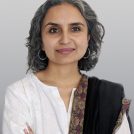
Specialises in development policy and programme research, and has worked on public access to services, governance frameworks, and justice sector institutions at national and subnational levels. She has worked with several multilateral organisations, governments and non-profits including Government of Punjab, United Nations, DAI, and the Vera Institute of Justice.


Khadija Hammad is an Advisory Associate at Tabadlab, working on gender equality, climate, and public development research. She holds a Bachelor of Science in Economics from NUST.
At Tabadlab, she contributes to projects for clients including the Gates Foundation and engages with stakeholders such as the National Commission on the Status of Women. She has produced policy reports, briefs, and op-eds on women's economic inclusion and education, designed institutional AI training, and maintains Tabadlab's gender and climate knowledge bases.
Previously, at Oxford Policy Management, Khadija worked on a nationwide education study, which involved designing research instruments, building econometric frameworks, managing fieldwork, and developing a digital intervention.

